
Software
Data breaches cost companies an average of $4.45 million per incident. Implementing these 10 internal safeguards will help cybersecurity leaders build a robust defense strategy against evolving threats while maintaining operational efficiency.
Role-Based Access Control Implementation

Tired of scrambling to revoke access after an employee leaves? Role-Based Access Control (RBAC) automates permissions based on job functions, ensuring only authorized personnel access sensitive data. This isn’t just about locking doors—it’s about eliminating the 60% of insider threats caused by misconfigured access when properly implemented.
RBAC works by assigning predefined roles (e.g., "Finance Manager," "HR Specialist") with granular permissions, like read-only access to payroll data or edit rights for contracts. Tools like Microsoft Active Directory or Okta streamline this with zero-config templates for common roles, cutting setup time by 70%. The real win? If a marketing intern leaves, their access vanishes instantly—no manual revokes needed.
Perfect for mid-sized businesses to enterprises where compliance audits (like GDPR or HIPAA) demand strict access controls. Start with your most sensitive departments—like legal or finance—and watch unauthorized data exposure shrink dramatically. ✨
Automated Data Encryption for Sensitive Files

If compliance deadlines and data breaches keep you up at night, automated encryption might be your new best friend. Unlike manual processes that rely on employee discipline, this solution locks files automatically—whether stored on servers or transmitted across networks—without requiring IT intervention.
Solutions like VeraCrypt (open-source) or Microsoft Azure Information Protection (cloud-based) offer AES-256 encryption by default, ensuring sensitive data meets HIPAA, GDPR, and PCI DSS standards out of the box. For healthcare or finance, these tools integrate with existing workflows, so patient records or transaction logs stay secure without slowing down operations.
This is the go-to safeguard for compliance-heavy industries where manual encryption would create bottlenecks. ⚡
Real-Time Endpoint Detection and Response

When your team works remotely across time zones, a single suspicious login could mean disaster before you even notice. Real-Time Endpoint Detection and Response (EDR) solutions like CrowdStrike or SentinelOne monitor every device for anomalies 24/7, stopping threats before they spread.
These tools use AI-driven behavioral analysis to detect ransomware, malware, or unauthorized access attempts in real time. Features like automated containment isolate infected devices instantly, while forensic-ready logs provide detailed incident reports. For organizations with 500+ endpoints, the average detection time drops from hours to minutes, drastically reducing breach impact.
This is non-negotiable for industries like healthcare or finance, but even small businesses with remote teams benefit. The key? Deploying EDR alongside your existing security stack for layered defense. 💻
Multi-Factor Authentication Enforcement

Automated attacks account for 99.9% of credential stuffing incidents—and multi-factor authentication (MFA) is the simplest, most effective way to stop them. Unlike firewalls or encryption, MFA doesn’t rely on static defenses; it actively verifies user identity through secondary prompts like biometrics, hardware tokens, or time-based codes.
Modern solutions like Duo Security or Microsoft Authenticator integrate seamlessly with Active Directory and Okta, enforcing MFA across VPNs, cloud apps, and executive email. The FIDO2 standard (now supported by most browsers) eliminates SMS vulnerabilities by using public-key cryptography—meaning even if passwords are stolen, attackers can’t proceed without physical confirmation. For financial systems, bank-grade MFA with hardware tokens (like YubiKey) adds an extra layer of defense against phishing.
This safeguard is non-negotiable for C-suite accounts, financial systems, and remote workforces—where a single compromised credential could trigger a $4.45M breach. Start with high-risk users (executives, admins) and scale to all employees for a zero-trust foundation. ✨
Automated Patch Management System

Forget the "set it and forget it" approach to software updates—an automated patch management system turns patching from a tedious chore into a zero-trust security powerhouse. These systems don’t just apply updates; they eliminate vulnerabilities before attackers can exploit them, slashing breach risks by 80% in organizations that deploy patches consistently.
Modern solutions like Patch Manager Plus or SolarWinds Serv-U scan your entire network for outdated software, prioritize critical fixes, and deploy them without manual intervention. They handle everything from Windows Server updates to third-party application patches, even scheduling deployments during off-hours to minimize downtime. With built-in compliance reporting, you’ll also stay ahead of regulatory requirements like PCI DSS or HIPAA effortlessly.
This isn’t just for IT teams—finance, healthcare, and legal firms rely on it to protect sensitive data. If your organization still patches systems manually, you’re leaving the door wide open. ⚡
Behavioral Analytics for User Activity

Financial fraud often starts with subtle behavioral shifts—like a sudden rush of transactions at odd hours or an employee suddenly accessing systems they’ve never touched. Behavioral analytics fills this gap by learning normal patterns (e.g., login times, data access frequency) and flagging deviations in real time, such as a 3 AM login or a 10x spike in file downloads from a single account.
Solutions like Vigilant AI or Splunk User Behavior Analytics integrate with existing SIEM tools to correlate anomalies across systems. For example, they can detect when a low-privilege user suddenly runs privileged commands—often a sign of compromised credentials. Financial institutions use this to track transaction velocity, while healthcare providers monitor patient record access patterns for insider threats.
This isn’t just for big banks: even mid-sized firms handling sensitive data (think legal or manufacturing) benefit. The key is deploying it alongside your existing safeguards—because while MFA stops bots, behavioral analytics stops the humans who’ve already gotten past them. 💡
Secure Document Collaboration Platforms
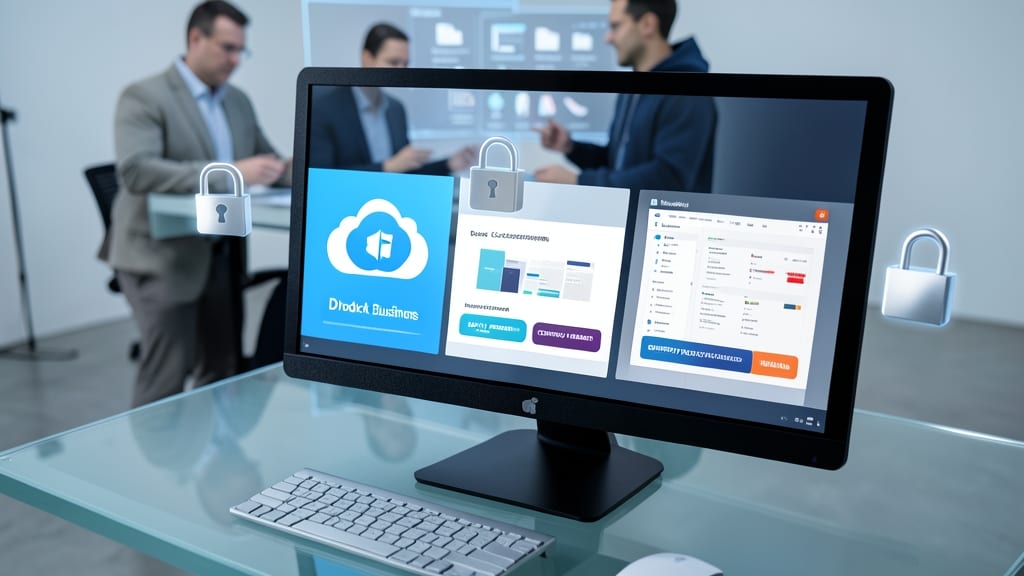
Tired of email attachments becoming security liabilities? Secure document collaboration platforms like Box, Dropbox Business, and Microsoft Purview replace risky file-sharing with end-to-end encryption and granular access controls—keeping sensitive IP locked down while enabling real-time teamwork.
These tools offer military-grade encryption (AES-256), version control to track changes, and expiring access links to prevent data leaks. Legal teams can enforce client confidentiality with audit logs, while creative studios protect unreleased designs through permission-based workflows—all without sacrificing collaboration efficiency.
Perfect for industries where intellectual property is currency—think law firms, ad agencies, or game studios—these platforms turn "need-to-know" security into a seamless team experience. ✨
Network Segmentation Architecture

When attackers breach your network, their ability to spread damage depends on how easily they can move laterally. Network segmentation architecture acts like a series of digital moats, isolating critical systems so that even if one segment is compromised, the rest remain protected. Studies show properly segmented networks reduce lateral movement opportunities by 75%, turning a potential data disaster into a contained incident.
This approach divides your network into distinct zones—like HR systems, financial databases, and guest Wi-Fi—each with its own security policies. Tools like VLANs, micro-segmentation, and zero-trust frameworks automate access controls between segments, ensuring only authorized traffic flows where it needs to. For example, a compromised employee device in the guest network can’t access your payroll servers without explicit permission.
Organizations handling regulated data (like healthcare or finance) benefit most from segmentation, as it simplifies compliance audits. Even smaller businesses can start with basic segmentation to limit breach impact—think of it as building digital firebreaks to contain threats before they escalate. 💪
Automated Security Awareness Training

Your employees might be your strongest security line—or your biggest vulnerability. Automated security awareness training transforms passive learners into proactive defenders by combining real-time phishing simulations with compliance modules, cutting human error risks by 50% without draining HR bandwidth.
Platforms like KnowBe4 or PhishMe deliver tailored scenarios (e.g., fake invoice scams or credential harvesters) that adapt to individual performance. Gamified modules reward completion, while automated reports highlight department-wide gaps—critical for teams with high turnover. The best systems integrate with your SIEM tools to close the loop between training and incident response.
This isn’t just another compliance checkbox—it’s a continuous improvement cycle that scales with your workforce. Startups with rapid hiring cycles or retail chains with seasonal staff will see immediate ROI in fewer breaches and faster incident response. ✨
Continuous Vulnerability Assessment Scans

While firewalls and encryption lock the doors, continuous vulnerability assessment scans act like a security team constantly inspecting for weak spots—before attackers even arrive. These automated tools scan your entire infrastructure daily, uncovering misconfigurations, outdated software, and exposed services that could become entry points for breaches.
Solutions like Tenable.io or Qualys VMDR provide real-time risk scoring and compliance reporting, prioritizing critical vulnerabilities (e.g., unpatched CVE-2024-1234 exploits) over minor issues. They integrate with ticketing systems to auto-generate remediation tasks, ensuring nothing slips through the cracks. For industries like healthcare or finance, these scans are non-negotiable for meeting PCI DSS or HIPAA requirements.
Ideal for mid-to-large enterprises with complex IT environments, these tools give security teams actionable insights without manual audits. Start with a quarterly deep dive and monthly scans to balance thoroughness with operational overhead. ✨