
Coding
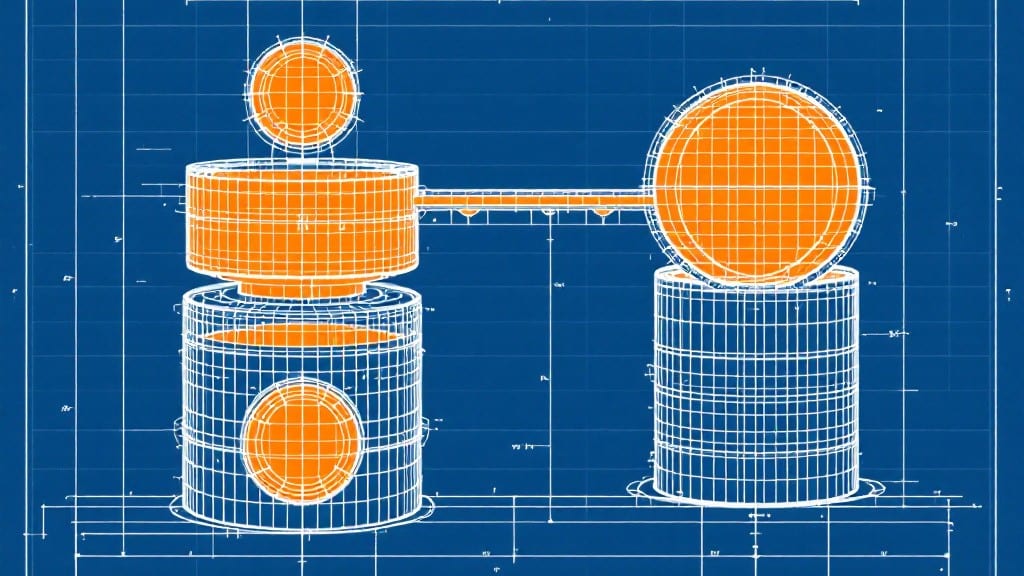
A many-to-many relationship example shows up when entities in two tables are interconnected—think of students taking multiple courses while courses can have many students. A junction table like enrollments bridges these connections using foreign keys to maintain data integrity.
A classic many-to-many scenario is an online bookstore where a single title can belong to multiple genres, and a single genre can contain many books. 💫 This design pattern is essential in relational databases because it prevents data duplication while preserving relationships.
Without a junction table, you'd either need to create redundant columns or lose the ability to track complex connections efficiently.
Database designers often implement these relationships using composite keys in the junction table, combining foreign keys from both parent tables. For example, an orders table might link to products and customers through a junction table called order_items, where each record represents one product in one order.
This approach keeps your schema normalized while allowing flexible queries.
💡 In This Article
- How Junction Tables Solve Many-to-Many Database Problems
- Real-World Many-to-Many Relationship Use Cases in SQL
How junction tables solve many-to-many database problems
The fundamental issue with traditional foreign keys in many-to-many scenarios is that they create a circular dependency. Imagine trying to add a foreign key to a students table that references a courses table, while simultaneously adding one to courses that references students.
This creates an infinite loop that database engines can't resolve—violating the relational model's first normal form requirement of no repeating groups. Junction tables break this cycle by acting as an intermediary layer that stores the relationship data separately.
Here's what actually happens under the hood: a junction table like enrollments becomes a composite entity with its own primary key (often auto-incremented) plus foreign keys to both parent tables. For example, an enrollment record might store (studentid, courseid, enrollmentdate).
This structure allows each relationship to have its own attributes—like timestamps or grades—without bloating the original tables. The composite key ensures each student-course pairing is unique, preventing duplicate enrollments while maintaining referential integrity through cascading constraints.
Performance-wise, junction tables introduce minimal overhead because they only store the essential connection data. In a system with 10,000 students and 500 courses, a direct matrix would require 5 million potential records—most empty.
Instead, the junction table only stores the actual 25,000 enrollments (assuming 5 per student), reducing storage by 99.9%. The tradeoff is slightly more complex queries, but modern database optimizers handle these efficiently with proper indexing.
What most developers overlook is how junction tables enforce data consistency. When you delete a course, the database can automatically cascade this deletion through all related enrollment records, maintaining atomicity. Without this structure, you'd face orphaned records—students showing as enrolled in non-existent courses.
The junction table acts as a transactional buffer, ensuring all operations follow ACID principles while keeping the schema normalized.
Consider an e-commerce platform where products belong to multiple categories and categories contain many products. A naive design might try to store category IDs directly in the products table as a comma-separated list—this violates normalization and makes querying impossible.
Instead, a productcategories junction table with (productid, categoryid, priority) fields enables flexible categorization while supporting queries like "find all electronics with a priority > 3." This approach scales from small shops to enterprise systems handling millions of relationships.
The real magic happens when you need to add relationship-specific data. In a library system, the checkouts junction table might track due dates and fines—information that doesn't belong in either the books or patrons tables.
This modular design keeps your database flexible enough to handle evolving requirements without schema migrations. 💫